Stop Recording 10 Hours of Rain: Why Manual Ambient Video Production is Dead
What recording 10 hours of rain actually involves — and why manual ambient production is dead. The old workflow, step by step, against the 25-minute AI pipeline.
"It's easy," every beginner thinks. "Record some rain, put it on loop, upload to YouTube. Easy money."
Spoiler: the rain has other plans. Ask anyone who has actually tried — here is how that experiment reliably goes.
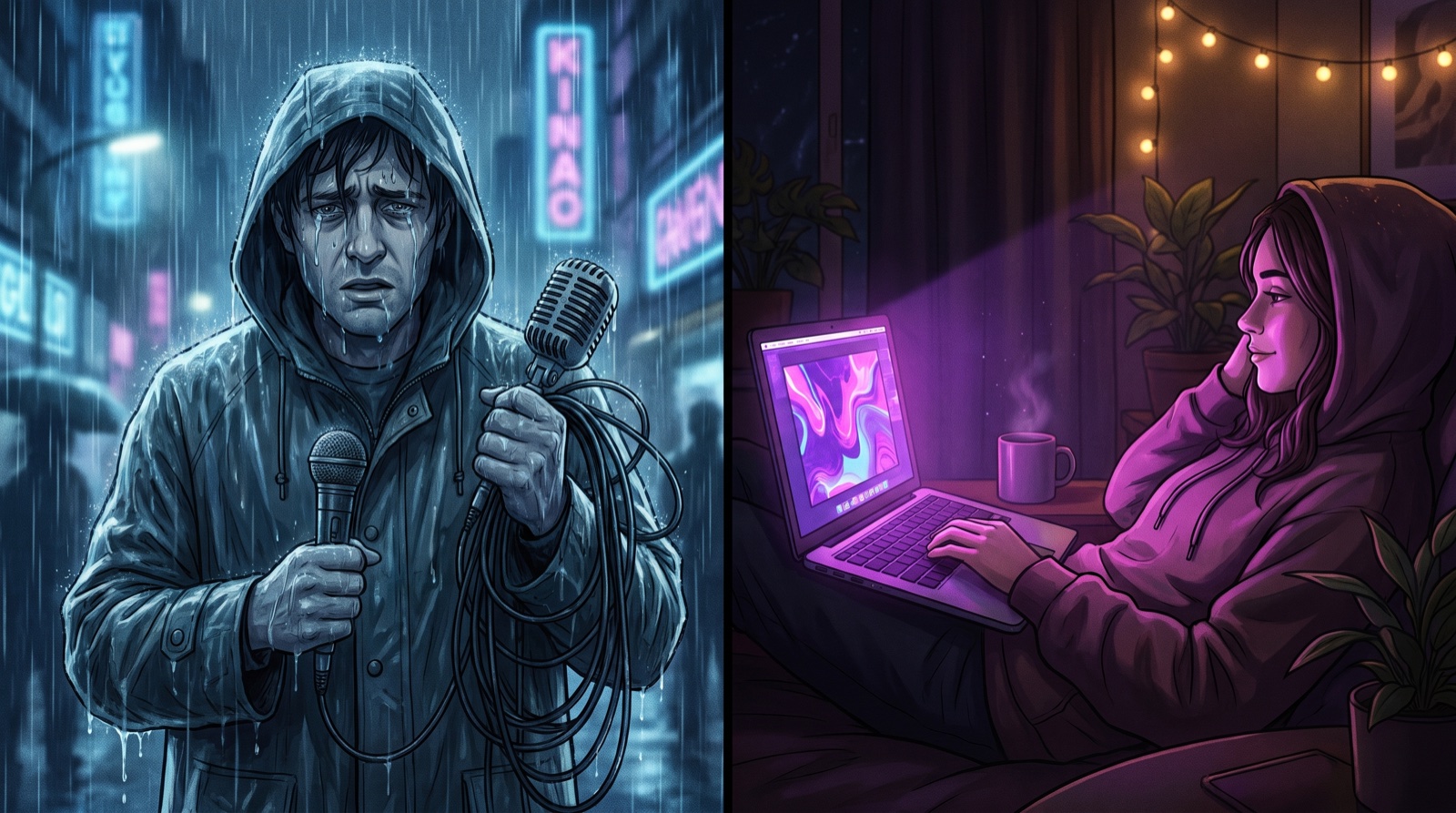
The Classic Experiment: A Week for One Video
The plan looks simple: record 10 hours of rain and thunder, add footage of drops on a window, done. Here's what that week actually looks like:
Days 1-2: Waiting for Weather
You need heavy, consistent rain. Not drizzle, not an intermittent downpour — specifically consistent. You check the forecast every hour. The weather trolls you.
Day 3: First Recording Attempt
Rain! You run out with the gear: field recorder, windscreen, tripod. You find a relatively quiet spot under an awning and hit record.
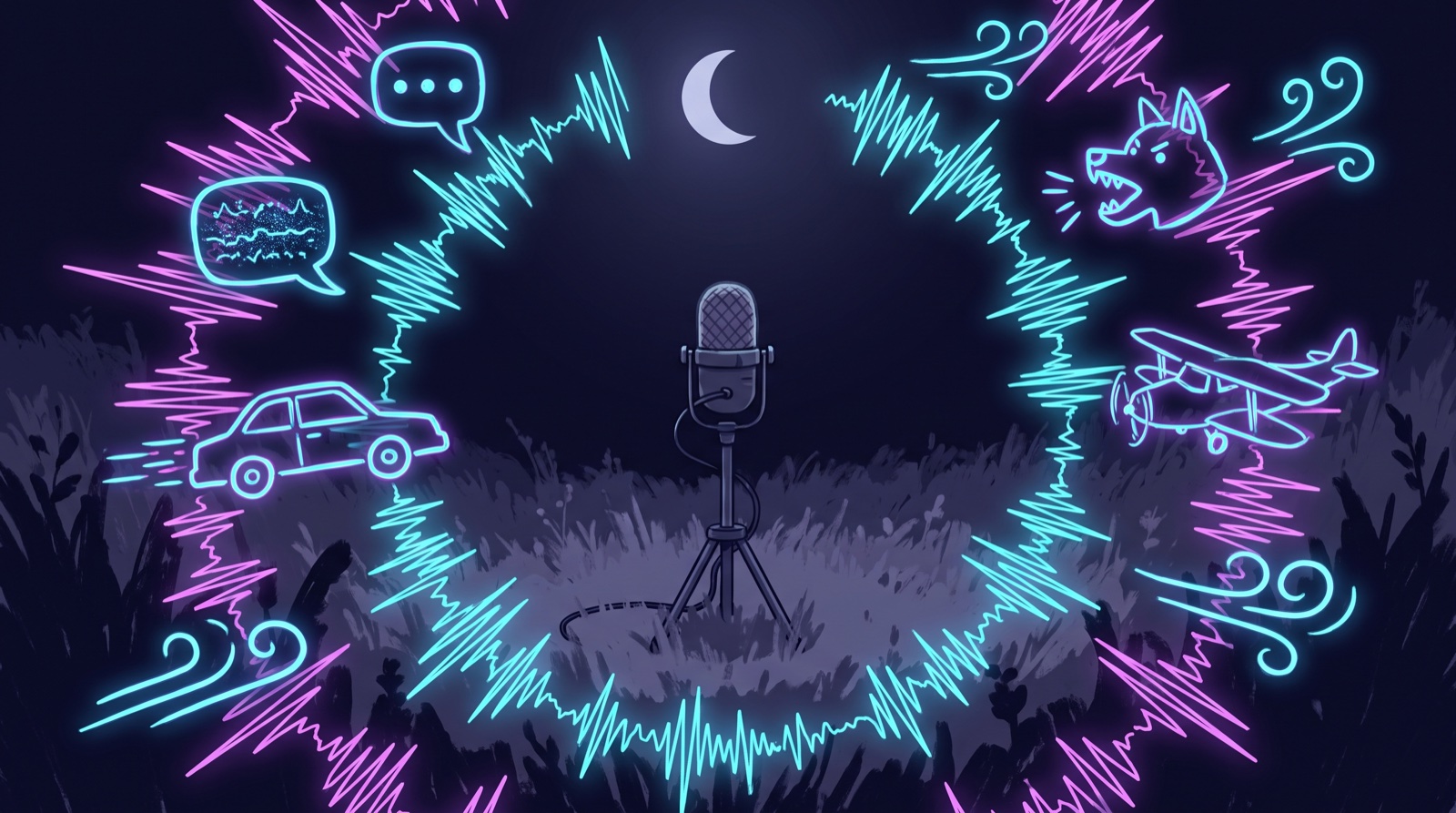
- • 00:42 — car drove by, loud puddle splash
- • 01:15 — neighbor came out to smoke, coughing
- • 02:03 — airplane
- • 02:47 — rain started weakening
- • 03:20 — rain stopped completely
Total: 3 hours of recording, maybe 30 minutes usable. Maybe.
Days 4-5: Trying Different Locations
You drive out of the city. Quieter — but now the mic hears birds, wind in the trees, occasionally a tractor in a nearby field. The recordings come in 20-40 minute chunks, and the transitions between them have to be found by hand.
Days 6-7: Editing Hell
You end up with ~4 hours of somewhat clean material. You need 10. That means building a seamless loop — stitching it together so nobody can hear the joint.
Have you ever tried to find a point where rain sounds identical at the beginning and end of a clip? That search can eat two full days. TWO DAYS.
"But can't you just loop a 10-minute clip?"
Technically — yes. Practically — viewers hate it. Comments immediately appear:
- • "Clear loop every 3 minutes, annoying"
- • "Can hear where the cut is"
- • "Dislike, this is just a repeat"
Algorithm sees dislikes and low retention — goodbye, recommendations.
What Changed
Today a 10-hour video is one evening of work. The full equipment list:
- Laptop (any that opens a browser)
- Internet
- Every Mood Studio
That's it. No microphones, no recorders, no windscreens, no waiting for weather.
How It Works Now
You open Every Mood Studio and describe what you want:
"Heavy rain with rolling thunder, like watching from a warm room. Occasional lightning flashes reflecting on the walls."
The AI generates:
- • Rain audio — 100% original, not from stock
- • Thunder with natural volume variations
- • Visuals with animated drops and flashes
- • Seamless loop built in from the start — no seams
You choose the duration (1, 3, 8, 10 hours), and after a stretch of processing you get the finished file.
"But AI content must be worse than real!"
This was fair 2-3 years ago. Today — no.
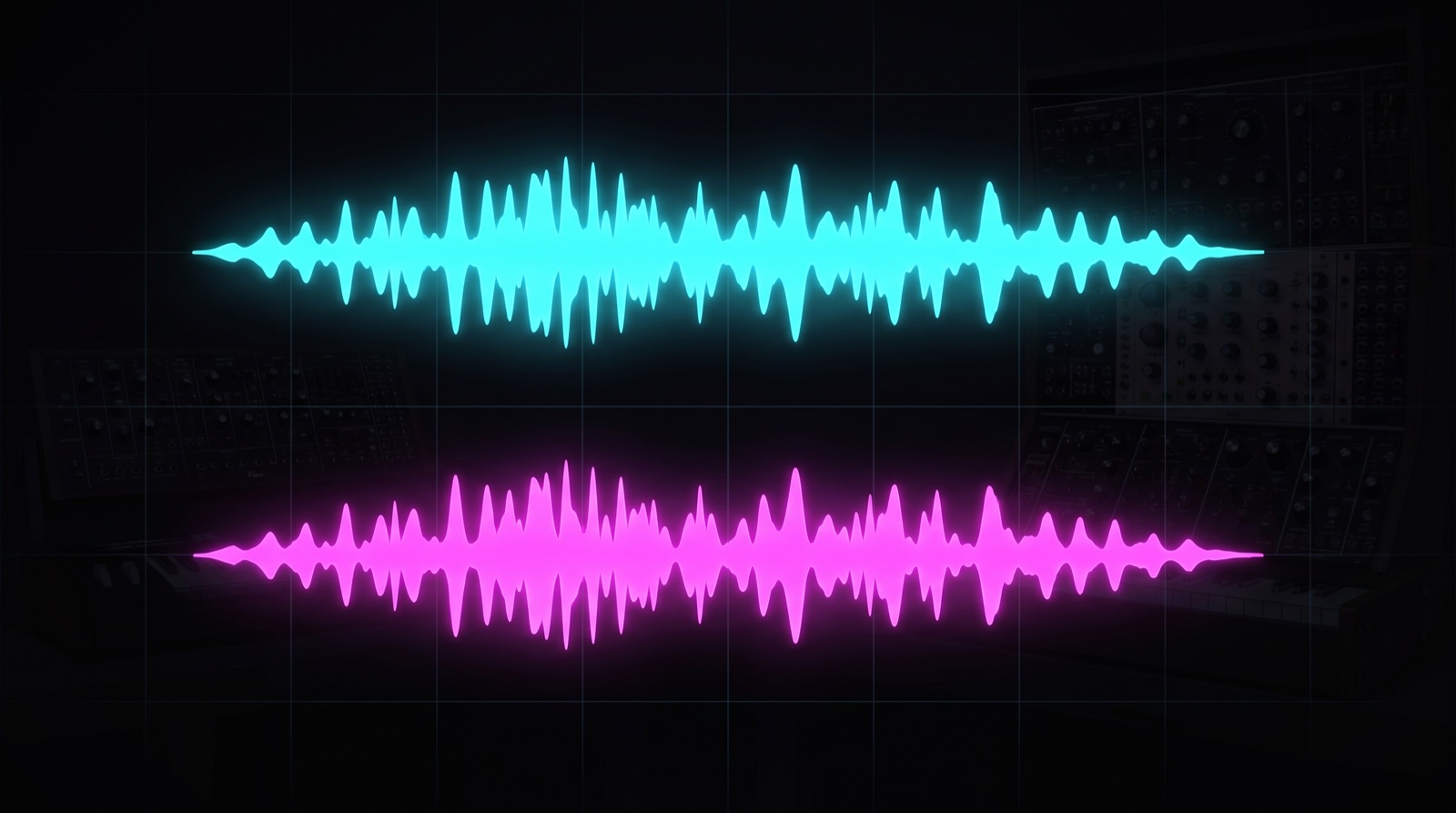
Put a generated rain bed next to a field recording and listen for what actually matters at 2 AM: consistency, no sudden events, a clean spectrum with nothing to snag the attention. Those are exactly the qualities generation is best at — and exactly where real recordings struggle, with their passing cars, coughing neighbors and weakening rain.
Viewers don't care how content is created. They care whether it works. A generated track is perfectly balanced by construction, with none of the artifacts a live recording drags in.
Scale Becomes Possible
Manual production realistically caps out at 1-2 videos per month — and burns people out.
With generation, a typical production week looks like this:
- • Monday: generate 3 projects with different themes
- • Tuesday-Wednesday: videos process (no involvement needed)
- • Thursday: upload everything to YouTube, schedule publishing
- • Friday-Sunday: rest, check analytics
12 videos per month instead of 2. Each video is a separate chance to hit recommendations. More content = more entry points for viewers.
Our Advice
If you're still thinking about recording rain yourself — don't. Seriously. The time you'd spend recording and editing one video is better invested in:
- • Analyzing which themes are working right now
- • Testing different combinations (rain + jazz, fireplace + lo-fi)
- • Optimizing titles and thumbnails
- • Creating more content
Production is what AI does better than us. Strategy and creativity — that's what stays with you.